Showing posts with label Apple. Show all posts

Tuesday, 10 February 2015

Lenovo S90 the i phone clone launched in India for 19,990/- specifications and features here.

After the online leak the Lenovo has finally launched the S90  I phone 6 clone for 19,990/-
I phone users don't need to worry it just looks like I phone but doesn't works like I phone.

Here are the full specs.

NETWORKTechnologyGSM / HSPA / LTE
LAUNCHAnnounced2014, November
StatusAvailable. Released 2014, November
BODYDimensions146 x 71.7 x 6.9 mm (5.75 x 2.82 x 0.27 in)
Weight129 g (4.55 oz)
SIMDual SIM (Micro-SIM, dual stand-by)
DISPLAYTypeSuper AMOLED capacitive touchscreen, 16M colors
Size5.0 inches (~65.8% screen-to-body ratio)
Resolution720 x 1280 pixels (~294 ppi pixel density)
MultitouchYes
PLATFORMOSAndroid OS, v4.4.4 (KitKat)
ChipsetQualcomm MSM8916 Snapdragon 410
CPUQuad-core 1.2 GHz Cortex-A53
GPUAdreno 306
MEMORYCard slotNo
Internal16/32 GB, 1/2 GB RAM
CAMERAPrimary13 MP, 4208 x 3120 pixels, autofocus, LED flash, check quality
Features1/3.2'' sensor size, 1.4µm pixel size, geo-tagging, touch focus, face detection, HDR
Video1080p@30fps, check quality
Secondary8 MP, AF, LED flash
SOUNDAlert typesVibration; MP3, WAV ringtones
LoudspeakerYes
3.5mm jackYes
COMMSWLANWi-Fi 802.11 b/g/n, hotspot
BluetoothYes
GPSYes, with A-GPS
NFCYes
RadioFM radio
USBmicroUSB v2.0
FEATURESSensorsAccelerometer, proximity
MessagingSMS(threaded view), MMS, Email, Push Mail, IM
BrowserHTML
JavaYes, via Java MIDP emulator
- Active noise cancellation with dedicated mic
- MP4/WMV/H.264 player
- MP3/WAV/WMA/eAAC+ player
- Photo/video editor
- Document viewer
BATTERYNon-removable Li-Ion 2300 mAh battery
Stand-by
Talk time
MISCColorsWhite/silver, gray, pink, soft orange, blue
Price group
TESTSPerformanceBasemark OS II: 1377 / Basemark OS II 2.0: 513
Basemark X: 1909
DisplayContrast ratio: Infinite (nominal) / 2.892 (sunlight)
CameraPhoto / Video
LoudspeakerVoice 66dB / Noise 65dB / Ring 75dB
Battery life


specs by gsmarena .


Saturday, 12 October 2013

Apple I phone Users Are Having a Blue Screen Problem.

The infamous "blue screen of death" seems to have expanded from Windows PCs to iPhones.
Several iPhone 5S owners report that their phones are turning a mean shade of blue and then restarting. Users chiming in on the Apple Support Communities and MacRumors forums said the problem occurs when they use the Numbers app in Apple's iWork suite, which comes free with the new iPhones. But a couple of people report that it also happens when using the ESPN ScoreCenter app.
The bug apparently has been present since the phone launched. One of the forum messages is dated September 21, the day after the 5S went on sale. One possible remedy, at least for users running into BSODs with iWork, is to disable iCloud syncing for the iWork suite, according to The Verge.

Saturday, 14 September 2013

Touch ID: Apples fingerprint scanner on Apple's iPhone 5s How It Works.


Apple unveiled the new iPhone 5s and iPhone 5c at a special event held at its headquarters in Cupertino. While the iPhone 5c did not live up to its promise of being a 'low-cost iPhone', the iPhone 5s showed off some promising innovations, like the new Apple A7 chip and, perhaps the highlight of the event, a built-in fingerprint scanner called Touch ID.
Touch ID can be used to unlock the phone, by simply placing a finger on the Home button. It can also be used to confirm purchases made on the App Store, iBookstore or the iTunes Store.
You can scan and add multiple fingerprints (e.g. left and right thumbs, as well as index fingers), including those from multiple people (e.g. your wife or kids), and Touch ID will authenticate based on any of stored prints.
In case you are worried about privacy, Apple assures that fingerprints are encrypted and stored in a secure area inside the new A7 chip. Fingerprints are not accessible to any third-party apps, and nor are they sent to Apple's servers or backed onto iCloud.
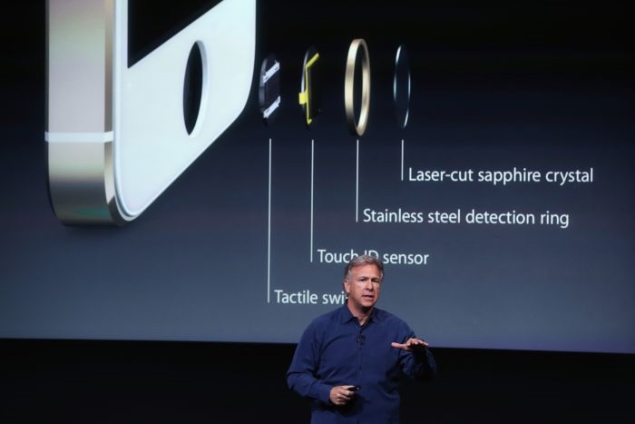
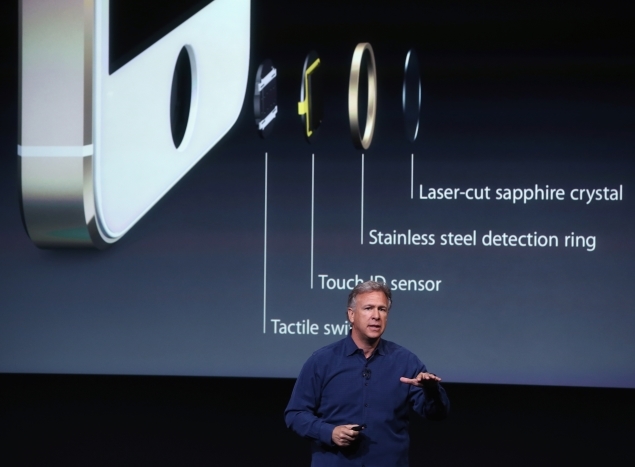
So what's the technology behind Apple's latest innovation? The Touch ID capacitive sensor embedded in the Home button scans your finger at 500ppi resolution to get a high resolution image of your finger. The sensor embedded in the Home button is just 170 microns thin.
The new Home button is made out of sapphire crystal, one of the "clearest, hardest" materials out there. The Home button protects the fingerprint sensor and also acts as a lens to precisely beam your fingerprint to the scanner. The Home button is surrounded by a steel ring, that can detect touches and tell Touch ID to start scanning when a finger is placed.
The sensor uses advanced capacitive touch to take high-resolution image of the sub-epidermal layers of your skin. The resultant image is then analysed, and grouped into one of three fingerprint types: Arch, Loop or Whorl. It then analyses ridges and other details too small for the human eye to see, to come up with a match for one of the stored fingerprints.
Update: Apple has reiterated that it stores only encrypted 'fingerprint data' obtained from the process detailed above and not the actual fingerprint image downplaying concerns of the iPhone 5s storing biometric data.
Apple also told WSJ that "customers who wish the use Touch ID also have to create a passcode as a backup. Only that passcode (not a finger) can unlock the phone if the phone is rebooted or hasn't been unlocked for 48 hours. This feature is meant to block hackers from stalling for time as they try to find a way to circumvent the fingerprint scanner."
Here is a link of video of Touch Id


Plz comment on the posts that you read and give your important feedback to us.
plz follow the blog if you liked it and also tell any suggestions or changes that should been done the blog Thanks for your support plz stay tuned for latest news and the tips and the tricks.


iOS 7: First impressions


One of the best things about Apple's latest iPhones is the slick new iOS 7 software that runs the devices. But that souped-up operating system could end up hurting sales because the free software upgrade will also work on iPhones released since 2010, giving owners of the older models less incentive to buy Apple's newest products.
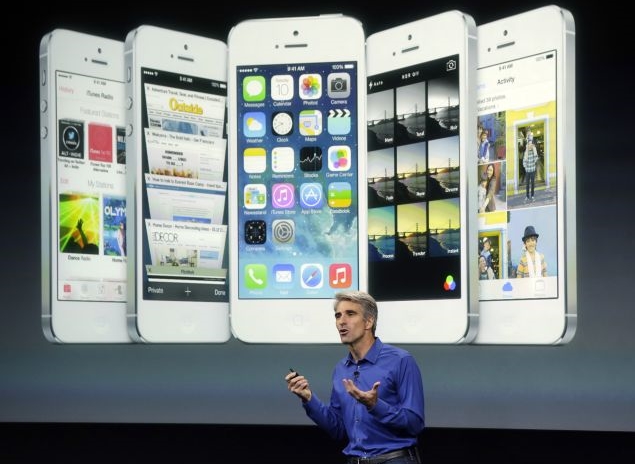
Perhaps unwittingly, even Apple's software boss Craig Federighi alluded to this potential problem while he was bragging about iOS 7 at the company's unveiling of its new phones Tuesday. He predicted that anyone who elects to install the software will feel "like they're getting an all-new device."

I understood what Federighi meant once I was able to see the iOS 7's improvements in action on Apple's two new iPhones, the iPhone 5c and the iPhone 5s. Although Apple announced iOS 7 at a conference three months ago, Tuesday marked the first time the company allowed reporters to experience the software hands-on.
Although the iPhone 5c is less expensive than its predecessor, the iPhone 5, iOS 7 almost made it look fancier than previous generations. As an iPhone 5 owner, I was feeling a bit envious until I remembered that I'll be able to spiff up my device, too, when the software is released on Sept. 18. The operating system will work on the iPhone 4 and later models, iPad 2s and subsequent versions, and the iPod Touch that came out late last year.

iOS 7 looks much different than previous versions of the operating system because it no longer displays iPhone apps as three-dimensional, embossed objects meant to mirror their real-world counterparts. The icons instead are flatter and more colorful.


Any significant change in design typically upsets users familiar with the old way of doing things, but I suspect the complaints about iOS 7 will be muted unless there are some terrible bugs in the software that weren't evident during the brief time that I was given to experiment.
I am fairly certain most people who download iOS 7 are going to be pleased. The software makes it easier to navigate around an iPhone and adds some compelling new features.

The additions include the ability to stream music through an advertising-supported service called iTunes Radio and five free apps that used to cost consumers anywhere from 99 cents to $4.99 apiece. The free apps are Apple's photo-editing tool, iPhoto, and video-editing program, iMovie, as well as work-oriented apps called Pages, Numbers and Keynote.
Apple doesn't appear to be removing any popular apps built into the operating system, as best as I could tell. The company did that last year when it replaced Google's mapping app with its own navigation system only to be ridiculed for misguiding users with shoddy directions. Apple isn't bringing back Google Maps with iOS 7, but it is promising that its alternative is getting better.
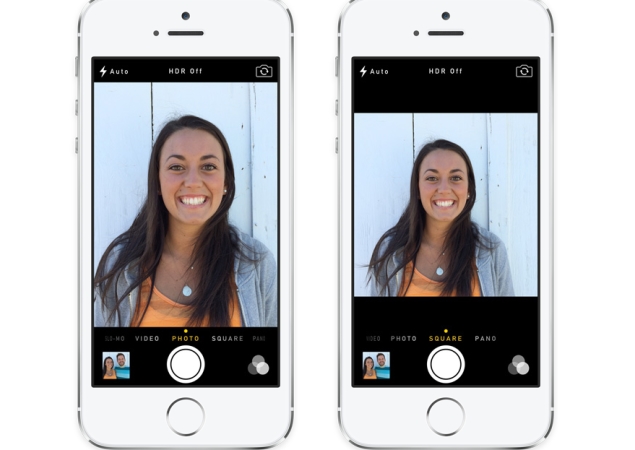
The software upgrade also will make it easier to take better pictures on the iPhone and automatically sort photos into different categories to denote particular events. I particularly liked a feature that lets you control how the camera operates by toggling between options at the bottom of the screen with the swipe of a finger. Once the camera is open in IOS 7, the choices include taking a square, panoramic or standard photo. The bottom-of-the screen controls also include an option to switch to video mode.


When taking a picture in iOS 7, photographers can also choose a filter to use as they snap the photo rather than waiting to touch up the shot later. When shooting video, shots can be zoomed in while recording. I can't do any of that on my iPhone 5 because it is still powered by iOS 6.
The new system also empowers users to access other open apps more easily by clicking twice on the home button. When you do that, the apps are displayed as tiles that can be scrolled across horizontally so you can more easily see and choose several of them.
Apple is also making it easier to access frequently used controls such as and airplane mode by enabling users to pull up the panel from the bottom of the display screen instead of finding and pressing a settings option.
Other than the new software, the iPhone 5c isn't anything special, as one might expect from a cheaper phone.

The only thing that really distinguishes the 5c from the iPhone 5 is that it's housed in plastic instead of aluminum. Some consumers will no doubt like the plastic alternative because it comes in five colors: green, blue, yellow, pink and white. The price also may be more appealing, with the 5c starting at $99 with a two-year wireless contract, a $100 discount from iPhone models released in previous years.
A higher-end iPhone dubbed the 5s boasts several advantages that aren't available on any other model. The coolest innovation allows you to use your fingerprint to unlock the iPhone 5s instead of relying on a four-digit code that has to be repeatedly typed in. The fingerprint reader can also be used to access Apple's apps and iTunes store instead of a password.

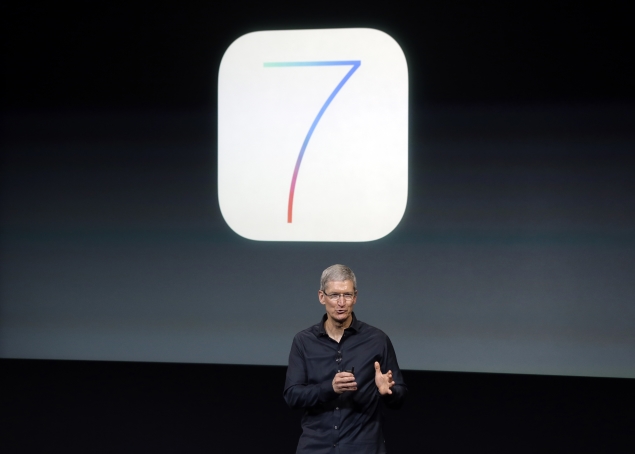
Apple CEO Tim Cook thinks the fingerprint scanner will revolutionize technology security. "There is going to be a whole new generation of kids who grow up not knowing what a password is," Cook predicted during a brief discussion with a small group of reporters after he left the room where Apple was demonstrating its new iPhones.


I found the fingerprint scanner, called "Touch ID," simple to use during my brief test of the 5s. It just took less than a minute for the phone to record the fingerprint on my thumb, instructing me along the way. Once my prints were in the phone's memory bank, all I had to do was lightly press on the home button when the 5s was locked in sleep mode and it quickly opened.
The 5s also contains a faster processor and technological wizardry designed to take sharper pictures and even record slow-motion video.
Best of all, though, the 5s comes with the iOS 7. I am already looking forward to downloading the software next week so I can simulate what it's like to have a new iPhone for free.

Plz comment on the posts that you read and give your important feedback.
and plz follow the blog if you liked it thanks for your support plz stay tuned for latest tech news tips and tricks. 


Wednesday, 11 September 2013

OS X Mavericks Most Likely Arriving In October.

Apple's next-generation operating system for desktops, OS X Mavericks, is already in the hands of developers, but we likely won't see version 10.9 make its way to consumer devices ahead of October. Some rumors had suggested Apple might ship the OS at its iPhone even next week, or another time during September, but both 9to5Mac and AllThingsD are now reporting late October for Mavericks' arrival.

Sources speaking to both publications maintain that Apple had dedicated most of its resources to shipping iOS 7 in time for the launch of its new iPhone hardware next week, and therefore planned the arrival of Mavericks for late October. It's worth noting that Apple previously said only that Mavericks would arrive this fall, and October still fits the bill, so this looks like it's in keeping with the original timeframe.

Mavericks brings an enhanced Finder, better multimonitor support, a standalone iBooks application, and improved power management to OS X-powered Macs. Developers using the preview claim that the latest builds feel very stable, though some suggest the latest version is a slight step backwards over the previous release. Either way, some had interpreted its stability as a sign of impending release, but these latest reports suggest users will be waiting a bit longer.

A big possibility with Mavericks is that it will release alongside new Mac hardware, of which Apple is thought to have plenty forthcoming. There's the Mac Pro, which is assembled in the U.S. and features a radical new design that uses external I/O for most of its expandability. Also in the works are new MacBook Pro devices, which will ship with Intel Haswell processors that, combined with Mavericks' power-saving tricks, could make for machines with very impressive battery life. It stands to reason that Apple would introduce OS X Mavericks alongside new hardware to showcase it, though if you've picked up one of the latest Haswell-powered MacBook Airs, expect those to get a juice boost from 10.9 as well.

Tuesday, 10 September 2013

Apple's Latest iPhone Is Expected To Target Cost-Conscious Customers.

You'd be forgiven for thinking: "Not another gadget launch!"
Formulaic as these events have become, Apple is breaking new ground with one of the two new additions to the iPhone range.
On stage, chief executive Tim Cook will do his best Steve Jobs impression and enthuse about the technological advances contained in the successor to the iPhone 5.
More significant though is the shift in strategy indicated by the parallel launch of a cheaper iPhone which will be aimed at more cost-conscious consumers.
Since the launch of the first iPhone, Apple has excelled in the smartphone market with relatively well-to-do consumers rushing in their droves to pay silly money for one of their handsets.
But having shaken up the market and given buyers new expectations about what can be done on their phones, Apple's imitators have narrowed the lead it once had in the smartphone market.
Brands like Samsung, HTC and Nokia don't have the same iconic status as Apple but their phones have gotten better and are an awful lot cheaper.
And what's particularly worrying for Apple is that buyers and phone companies in emerging markets aren't willing to pay a developed-world premium for their phones.
You could say that the "C" in the name of the budget iPhone stands for "China", as well as "cheap".
China Mobile, the biggest mobile provider in the most populous country in the world, reportedly baulked at the subsidies demanded by Apple to sell iPhones to their customers.
Reflect for a moment on just how many customers China Mobile has: 740 million. That's roughly twice the population of the United States.
That's a market Apple wants to take a bite out of even if it has to create a special phone just to get the chance.